
Blog
How to Increase Organic Traffic Without Paid Ads

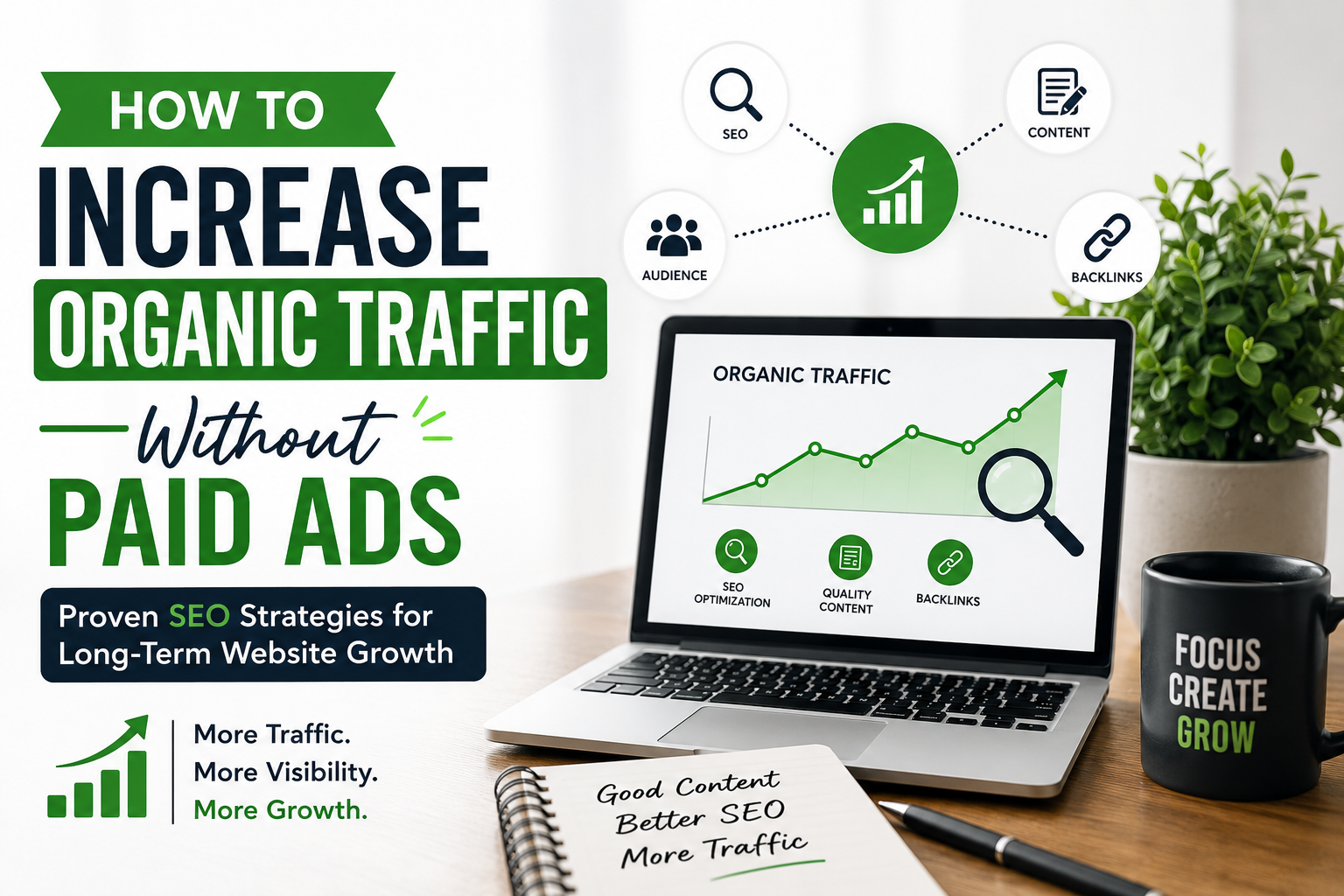
How to Increase Organic Traffic Without Paid Ads
Meta Title: How to Increase Organic Traffic Without Paid Ads | Complete SEO Guide
Meta Description: Learn how to increase organic traffic without paid ads using proven SEO strategies, quality content, keyword research, technical optimization, and link-building techniques.
How to Increase Organic Traffic Without Paid Ads
Driving website traffic without spending money on advertisements is one of the biggest goals for businesses, bloggers, and digital marketers. While paid ads can deliver quick results, they stop generating traffic the moment you stop paying. Organic traffic, on the other hand, continues to grow over time and provides long-term value.
Organic traffic refers to visitors who find your website through unpaid search engine results. Achieving consistent organic traffic requires strategic planning, quality content, and ongoing optimization. Fortunately, with the right SEO techniques, anyone can improve their website's visibility and attract targeted visitors naturally.
In this comprehensive guide, you'll learn practical strategies to increase organic traffic without relying on paid advertising.
What Is Organic Traffic?
Organic traffic consists of visitors who reach your website through search engines like Google, Bing, or Yahoo without clicking on sponsored advertisements.
For example, if someone searches "best SEO tips" on Google and clicks your blog because it appears in the search results, that visit counts as organic traffic.
Organic traffic is valuable because these visitors are actively searching for information, products, or services, making them more likely to engage with your content.
Why Organic Traffic Matters
Growing organic traffic offers several long-term benefits:
Builds trust and credibility
Generates consistent visitors
Reduces marketing expenses
Produces higher ROI over time
Improves brand awareness
Attracts highly targeted audiences
Supports long-term business growth
Unlike paid campaigns, organic SEO continues working even after your content has been published.
1. Perform Effective Keyword Research
Keyword research is the foundation of every successful SEO strategy.
Instead of targeting highly competitive keywords, focus on keywords your audience is actually searching for.
Use Long-Tail Keywords
Long-tail keywords usually contain three or more words and are easier to rank for.
Examples:
Best SEO tools for beginners
How to improve website ranking
Organic traffic tips for small businesses
These keywords often have higher conversion rates because they match specific search intent.
Understand Search Intent
Every keyword represents a user's goal.
Common search intents include:
Informational
Navigational
Commercial
Transactional
Creating content that matches search intent increases your chances of ranking.
2. Create High-Quality Content
Content remains one of Google's strongest ranking factors.
Focus on creating content that is:
Helpful
Original
Well-researched
Easy to understand
Updated regularly
Avoid writing solely for search engines. Write for people first.
Your content should answer readers' questions better than competing pages.
3. Write Attention-Grabbing Headlines
Your headline determines whether people click your article.
A strong title should:
Include your main keyword
Be clear
Create curiosity
Explain the benefit
Examples:
15 Easy Ways to Increase Organic Traffic
SEO Tips That Actually Work
Beginner's Guide to Organic Website Growth
4. Optimize On-Page SEO
Even excellent content won't perform well without proper optimization.
Important on-page SEO elements include:
Title Tags
Include your target keyword near the beginning.
Meta Descriptions
Write compelling descriptions encouraging users to click.
Headings
Organize your content using:
H1
H2
H3
This improves readability.
Image Optimization
Compress images and include descriptive ALT text.
Internal Links
Link related pages together to improve navigation and distribute authority throughout your website.
5. Improve Website Speed
Slow websites lose visitors quickly.
Improve loading speed by:
Compressing images
Enabling browser caching
Using fast hosting
Minimizing CSS and JavaScript
Removing unnecessary plugins
A faster website provides a better user experience and improves search rankings.
6. Make Your Website Mobile-Friendly
Most users browse websites on smartphones.
Google primarily uses mobile-first indexing, meaning your mobile website significantly influences rankings.
Ensure your website:
Loads quickly on mobile
Has responsive design
Uses readable fonts
Includes clickable buttons
Provides smooth navigation
7. Publish Content Consistently
Search engines prefer websites that regularly publish valuable content.
Create a content calendar and stick to a publishing schedule.
Consistency helps:
Build authority
Increase keyword rankings
Attract repeat visitors
Encourage faster indexing
Quality should always come before quantity.
8. Focus on User Experience
User experience (UX) affects SEO more than many people realize.
Improve UX by:
Simplifying navigation
Using short paragraphs
Adding bullet points
Including visuals
Improving readability
Visitors should easily find the information they need.
9. Earn High-Quality Backlinks
Backlinks remain one of Google's strongest ranking signals.
Ways to earn backlinks include:
Guest posting
Creating valuable guides
Publishing original research
Building useful resources
Networking with industry websites
Avoid purchasing low-quality backlinks because they can harm your rankings.
10. Update Existing Content
Updating old articles is often easier than creating new ones.
Refresh content by:
Adding current statistics
Improving readability
Updating screenshots
Expanding sections
Fixing broken links
Updated content often regains rankings quickly.
11. Optimize for Featured Snippets
Featured snippets appear at the top of Google search results.
Increase your chances by:
Answering questions clearly
Using numbered lists
Adding tables
Writing concise definitions
Including FAQ sections
Featured snippets significantly increase visibility.
12. Use Schema Markup
Schema markup helps search engines understand your content.
It can improve your appearance in search results through:
FAQ snippets
Reviews
Ratings
Products
Articles
Breadcrumbs
Rich results often increase click-through rates.
13. Improve Internal Linking
Internal links guide users toward related content.
Benefits include:
Better crawling
Longer session duration
Reduced bounce rate
Improved page authority
Every important article should link to related pages.
14. Optimize Images
Large images slow websites considerably.
Best practices include:
Compress images
Rename image files
Add descriptive ALT text
Use modern formats like WebP
Optimized images can also generate traffic from Google Images.
15. Leverage Social Media
Although social media doesn't directly improve rankings, it helps your content reach more people.
Share articles on:
LinkedIn
Facebook
X (Twitter)
Instagram
Pinterest
More visibility often leads to backlinks and increased organic traffic.
16. Target Low-Competition Keywords
Many new websites struggle because they target highly competitive keywords.
Instead:
Focus on niche topics
Answer specific questions
Solve unique problems
Ranking for many small keywords often produces more traffic than chasing one difficult keyword.
17. Monitor SEO Performance
Track your progress using SEO tools such as:
Google Search Console
Google Analytics 4
Ahrefs
SEMrush
Monitor:
Organic clicks
Impressions
Keyword rankings
Bounce rate
User engagement
Regular analysis helps identify improvement opportunities.
Common Mistakes That Reduce Organic Traffic
Avoid these common SEO mistakes:
Keyword stuffing
Duplicate content
Slow website speed
Broken links
Thin content
Ignoring mobile optimization
Poor internal linking
Not updating old articles
Missing meta descriptions
Publishing low-quality content
Correcting these issues can significantly improve rankings.
Long-Term SEO Strategy
Growing organic traffic requires patience.
A sustainable strategy includes:
Publishing quality content regularly
Building authoritative backlinks
Improving technical SEO
Updating existing articles
Monitoring analytics
Understanding user intent
SEO is a continuous process, not a one-time task.
Frequently Asked Questions (FAQs)
1. What is organic traffic?
Organic traffic refers to visitors who find your website through unpaid search engine results rather than advertisements.
2. How long does SEO take to increase organic traffic?
SEO typically takes between 3 to 6 months to show noticeable improvements, depending on competition, website quality, and consistency.
3. Can I increase traffic without buying ads?
Yes. By focusing on SEO, valuable content, keyword research, technical optimization, and link building, you can generate sustainable organic traffic without paid advertising.
4. Which SEO strategy works best?
There is no single strategy. Combining quality content, keyword optimization, technical SEO, internal linking, and backlinks delivers the best long-term results.
5. Does updating old content improve rankings?
Yes. Refreshing outdated articles with new information, better formatting, and current keywords can significantly improve search rankings.
6. Is organic traffic better than paid traffic?
Organic traffic generally provides better long-term value because it continues to generate visitors without ongoing advertising costs.
Conclusion
Increasing organic traffic without paid ads is entirely achievable with the right SEO strategy and consistent effort. Instead of relying on short-term advertising campaigns, focus on creating valuable content, targeting the right keywords, improving website performance, and earning quality backlinks. These techniques not only help your website rank higher in search engines but also build trust and authority with your audience.
Remember that SEO is a long-term investment. Results may not appear overnight, but with patience, continuous optimization, and a user-first approach, your website can attract a steady stream of high-quality organic visitors. Stay consistent, monitor your performance, and keep refining your strategy to achieve sustainable growth over time.https://danishjamilseo.com/https://danishjamilseo.com/