
Blog
Top 5 SEO Techniques to Rank #1 on Google in 2026

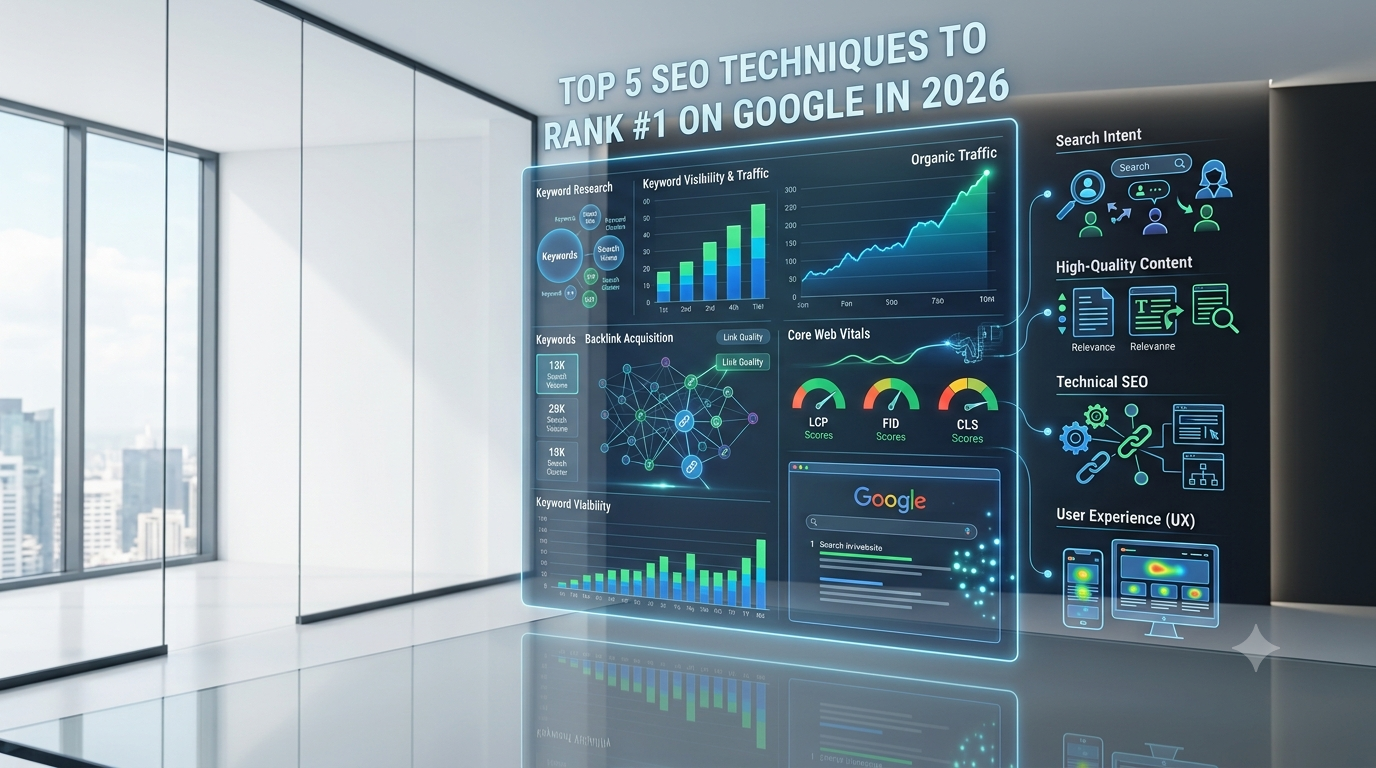
Top 5 SEO Techniques to Rank #1 on Google in 2026
Search Engine Optimization (SEO) continues to evolve as search engines become smarter and user expectations grow. In 2026, ranking at the top of Google is no longer about stuffing keywords into web pages or building hundreds of low-quality backlinks. Instead, success depends on creating valuable content, delivering an excellent user experience, and ensuring your website is technically optimized.
Google now prioritizes websites that demonstrate expertise, authority, trustworthiness, and genuine value for users. Businesses that adapt to these changes are more likely to increase organic traffic, improve visibility, and generate high-quality leads without relying solely on paid advertising.
Whether you own a business website, run an eCommerce store, manage a blog, or provide digital services, understanding the latest SEO strategies can give you a significant competitive advantage.
In this guide, you’ll discover the top five SEO techniques that can help improve your search rankings in 2026 while building sustainable, long-term organic growth.
1. Focus on Search Intent and Smart Keyword Research
Keyword research remains one of the foundations of SEO, but in 2026, understanding search intent is more important than simply finding high-volume keywords.
Search intent refers to the reason behind a user’s search. Google aims to provide results that best match what users actually want.
There are four primary types of search intent:
Informational
Navigational
Commercial
Transactional
For example:
Instead of targeting only:
SEO
Target phrases like:
Best SEO techniques for beginners
How to improve Google rankings
SEO checklist for 2026
Technical SEO guide
Local SEO tips
These keywords are more specific and attract visitors who are actively searching for solutions.
Best Practices
Target long-tail keywords.
Analyze competitors.
Use semantic keywords naturally.
Optimize headings.
Answer common user questions.
Include related search terms.
When your content perfectly matches user intent, Google is more likely to reward it with higher rankings.
2. Create Helpful, High-Quality Content
Content remains the most powerful ranking factor.
Google’s Helpful Content System favors websites that genuinely solve users’ problems instead of publishing articles created only for search engines.
Every article should provide:
Accurate information
Clear explanations
Practical examples
Actionable advice
Updated facts
Instead of writing shallow 500-word posts, create comprehensive content that fully answers readers’ questions.
A high-quality article should include:
An engaging introduction
Clear headings
Short paragraphs
Bullet points
Internal links
External references
Images
Infographics
FAQs
Google also values content freshness. Updating existing articles with new information often improves rankings faster than publishing brand-new content.
Helpful Content Tips
Write for humans first.
Avoid keyword stuffing.
Add real-world examples.
Include original insights.
Cover the topic in depth.
Keep information updated.
The more useful your content is, the longer users stay on your website, sending positive engagement signals to Google.
3. Strengthen Technical SEO
Even the best content may struggle to rank if your website has technical issues.
Technical SEO ensures that search engines can crawl, index, and understand your website efficiently.
Some of the most important technical SEO factors include:
Fast Website Speed
Users expect pages to load within seconds.
Slow websites experience:
Higher bounce rates
Lower conversions
Reduced rankings
Optimize speed by:
Compressing images
Using browser caching
Enabling GZIP compression
Minimizing JavaScript
Using a Content Delivery Network (CDN)
Mobile Optimization
More than half of all searches now happen on mobile devices.
Ensure your website:
Is fully responsive
Has readable text
Features clickable buttons
Loads quickly on smartphones
Secure Website (HTTPS)
Google considers HTTPS a ranking signal.
Always install an SSL certificate to protect user data and build trust.
Crawlability
Search engines should easily access every important page.
Create:
XML sitemap
Robots.txt file
Clean URL structure
Logical navigation
Core Web Vitals
Google measures:
Loading performance
Visual stability
Responsiveness
Improving these metrics enhances both rankings and user experience.
4. Build High-Quality Backlinks
Backlinks remain one of Google’s strongest ranking signals.
However, quality matters far more than quantity.
One backlink from a trusted, authoritative website can provide more value than hundreds of spammy links.
Effective backlink strategies include:
Guest Posting
Publish valuable articles on reputable industry websites.
Digital PR
Create unique research, reports, or case studies that journalists and bloggers naturally reference.
Resource Link Building
Develop valuable guides, tools, or templates that other websites want to link to.
Broken Link Building
Find broken links on relevant websites and suggest your content as a replacement.
Linkable Assets
Examples include:
Free tools
Calculators
Checklists
Templates
Industry statistics
Original research
Avoid purchasing backlinks or participating in link schemes, as these practices can lead to Google penalties.
Instead, focus on earning links by consistently producing exceptional content.
5. Improve User Experience (UX) and On-Page SEO
Google increasingly evaluates how users interact with websites.
A positive user experience encourages visitors to stay longer, explore more pages, and return in the future.
Optimize Title Tags
Write compelling titles that include your primary keyword naturally.
Example:
Top 5 SEO Techniques to Rank #1 on Google in 2026
Write Effective Meta Descriptions
Although meta descriptions are not direct ranking factors, they improve click-through rates.
Use Proper Heading Structure
Organize content with:
H1
H2
H3
This improves readability for both users and search engines.
Internal Linking
Connect related pages throughout your website.
Benefits include:
Better crawling
Increased page authority
Longer session duration
Image Optimization
Use:
Descriptive filenames
Alt text
Compressed images
Improve Readability
Readers prefer:
Short sentences
Bullet points
White space
Clear formatting
Excellent user experience leads to better engagement metrics, which can indirectly improve search rankings.
Additional SEO Tips for 2026
Beyond the top five techniques, consider these modern SEO practices:
Optimize for voice search.
Add structured data (Schema Markup).
Create topical authority around your niche.
Publish content consistently.
Improve local SEO if you serve a geographic area.
Monitor Google Search Console regularly.
Refresh outdated articles.
Optimize for AI-powered search experiences.
Track keyword performance monthly.
Build brand authority through expert content.
SEO is no longer about shortcuts. Long-term consistency produces the best results.
Frequently Asked Questions (FAQs)
1. What is the most important SEO technique in 2026?
Creating helpful, user-focused content that matches search intent is considered the most important SEO strategy in 2026.
2. How long does SEO take to show results?
SEO typically takes between three and six months to produce noticeable improvements, although competitive industries may require more time.
3. Are backlinks still important?
Yes. High-quality backlinks from authoritative websites remain one of Google’s strongest ranking signals.
4. Why is technical SEO important?
Technical SEO helps search engines crawl, index, and understand your website while improving speed, mobile usability, and overall performance.
5. Does AI-generated content rank on Google?
AI-assisted content can rank if it is original, accurate, valuable, well-edited, and created primarily to help users rather than manipulate search rankings.
6. What are Core Web Vitals?
Core Web Vitals are performance metrics that measure loading speed, responsiveness, and visual stability, all of which contribute to user experience.
7. How often should I update my website content?
Review and update important pages every few months or whenever significant industry changes occur to keep content relevant and competitive.
8. Is local SEO necessary for small businesses?
Yes. Local SEO helps businesses appear in location-based searches, making it essential for attracting nearby customers and increasing local visibility.
Conclusion
SEO in 2026 is centered on delivering genuine value to users while meeting Google’s evolving quality standards. Rather than relying on outdated tactics, successful websites combine search intent optimization, high-quality content, strong technical SEO, authoritative backlinks, and an outstanding user experience.
Ranking on the first page of Google is a long-term process that requires consistency, patience, and continuous improvement. By implementing these five proven SEO techniques and regularly monitoring your website’s performance, you can build lasting organic visibility, attract targeted traffic, and establish your brand as a trusted authority in your industry.
Remember, sustainable SEO success comes from focusing on your audience first. When your content solves real problems and your website provides a seamless experience, higher rankings become a natural outcome rather than a short-term goal.