
Blog
5 Essential SEO Techniques to Increase Website Traffic

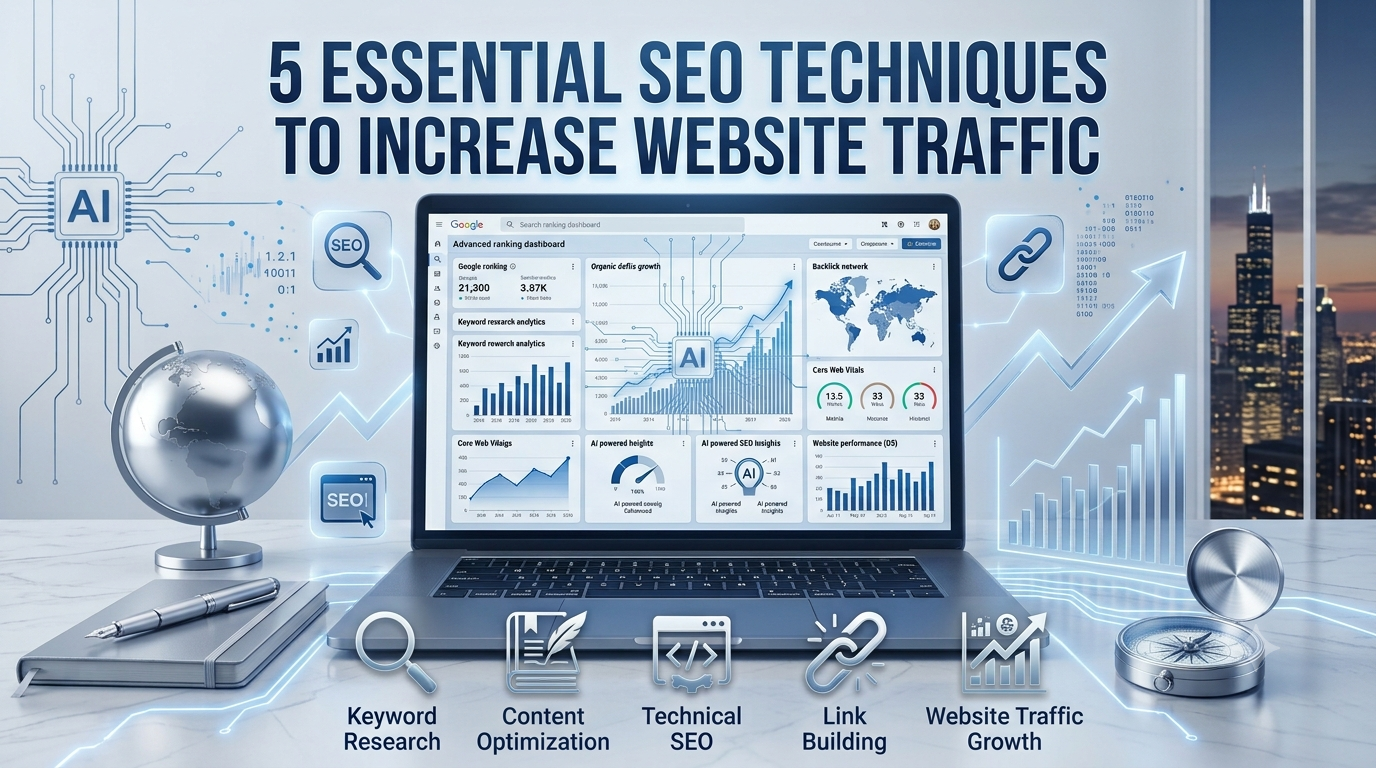
5 Essential SEO Techniques to Increase Website Traffic
Introduction
Website traffic is the lifeblood of every online business. Whether you own an eCommerce store, a corporate website, a blog, or a service-based platform, attracting consistent visitors is essential for generating leads, increasing sales, and building brand awareness. While paid advertising can deliver quick results, it often requires continuous investment. Search Engine Optimization (SEO), on the other hand, provides a sustainable and cost-effective way to drive high-quality organic traffic over the long term.
SEO has evolved significantly over the past few years. Search engines like Google now prioritize websites that provide valuable content, fast loading speeds, excellent user experiences, and trustworthy information. Simply adding keywords to your pages is no longer enough. Businesses must adopt modern SEO strategies that focus on solving user problems while meeting Google’s quality standards.
Implementing the right SEO techniques can improve your website’s visibility, help you rank higher in search results, and attract visitors who are genuinely interested in your products or services. In this article, we will explore five essential SEO techniques that can help increase website traffic and strengthen your online presence in 2026.
1. Perform Comprehensive Keyword Research
Every successful SEO campaign begins with understanding what your audience is searching for. Keyword research helps identify the search terms potential visitors use to find information, products, or services online.
However, modern keyword research goes beyond search volume. It also focuses on search intent, competition, and relevance.
There are four main types of search intent:
Informational
Navigational
Commercial Investigation
Transactional
For example:
“How to improve SEO” reflects informational intent.
“Best SEO agency” indicates commercial investigation.
“Buy SEO tools” shows transactional intent.
To improve keyword research:
Focus on long-tail keywords.
Analyze competitor websites.
Use related semantic keywords naturally.
Answer common user questions.
Target keywords with achievable competition levels.
Creating content that aligns with user intent increases engagement, improves rankings, and attracts more qualified visitors.
2. Publish High-Quality and Helpful Content
Content remains one of Google’s most important ranking factors. The search engine rewards websites that consistently publish original, informative, and helpful content created for users rather than algorithms.
Effective content should:
Solve real problems.
Be accurate and trustworthy.
Include practical advice.
Offer unique perspectives.
Be easy to understand.
Stay updated over time.
A well-optimized article typically includes:
A strong introduction.
Clear headings.
Short paragraphs.
Bullet points.
Practical examples.
Internal links.
Frequently Asked Questions.
A compelling conclusion.
Instead of publishing multiple short articles on similar topics, create comprehensive resources that cover subjects in depth.
Regularly updating existing content also signals freshness to search engines and helps maintain strong rankings.
3. Optimize Technical SEO
Technical SEO ensures search engines can crawl, index, and understand your website while delivering a fast and enjoyable user experience.
Improve Website Speed
Fast-loading pages improve visitor satisfaction and reduce bounce rates.
Ways to improve speed include:
Compressing images.
Minimizing CSS and JavaScript.
Using browser caching.
Choosing reliable hosting.
Implementing a CDN.
Mobile Optimization
Google uses mobile-first indexing, making responsive design essential.
Your website should:
Adapt to every screen size.
Load quickly on smartphones.
Provide intuitive navigation.
Use readable fonts.
Secure Your Website
HTTPS encryption builds trust and protects user data.
Improve Crawlability
Help search engines discover your content by:
Creating XML sitemaps.
Configuring robots.txt.
Fixing broken links.
Eliminating duplicate pages.
Optimize Core Web Vitals
Google evaluates:
Largest Contentful Paint (LCP)
Interaction to Next Paint (INP)
Cumulative Layout Shift (CLS)
Improving these metrics enhances both SEO performance and user experience.
4. Build High-Quality Backlinks
Backlinks remain one of Google’s strongest ranking signals because they demonstrate authority and trust.
Modern SEO focuses on earning quality backlinks rather than accumulating large quantities of low-value links.
Effective backlink strategies include:
Guest Blogging
Publish valuable articles on reputable websites within your niche.
Digital PR
Create original research, surveys, and industry reports that journalists naturally reference.
Resource Creation
Develop:
Templates
Checklists
Free tools
Comprehensive guides
Industry reports
These resources naturally attract backlinks.
Broken Link Building
Find broken links on authoritative websites and recommend your content as a replacement.
Avoid buying backlinks or participating in link schemes because these practices violate Google’s guidelines.
5. Improve On-Page SEO and User Experience
Google wants users to enjoy visiting the websites it recommends. Therefore, improving user experience directly contributes to better rankings.
Optimize Title Tags
Create compelling titles containing your primary keyword naturally.
Example:
5 Essential SEO Techniques to Increase Website Traffic
Write Effective Meta Descriptions
Clear meta descriptions improve click-through rates by explaining the value of your content.
Use Proper Heading Structure
Organize information using:
H1
H2
H3
This improves readability and helps search engines understand your page.
Internal Linking
Connect related articles throughout your website to improve navigation and distribute authority.
Optimize Images
Improve image SEO by:
Compressing file sizes.
Using descriptive filenames.
Writing meaningful alt text.
Improve Readability
Readers engage more with content that includes:
Short paragraphs.
Bullet points.
Clear formatting.
Simple language.
A better user experience encourages visitors to stay longer and explore additional pages.
Additional SEO Tips for More Website Traffic
To maximize your SEO results, consider these additional strategies:
Optimize for voice search.
Add Schema Markup for rich snippets.
Build topical authority by covering related subjects.
Refresh outdated content regularly.
Monitor Google Search Console.
Track keyword rankings monthly.
Improve website accessibility.
Target featured snippets.
Analyze competitor strategies.
Publish content consistently.
These techniques complement your core SEO efforts and support long-term traffic growth.
Frequently Asked Questions (FAQs)
1. What is SEO?
SEO (Search Engine Optimization) is the process of improving a website’s visibility in search engine results to attract unpaid, organic traffic.
2. Which SEO technique is most effective?
Creating high-quality content that matches user intent is one of the most effective SEO techniques for improving rankings and traffic.
3. Why is technical SEO important?
Technical SEO helps search engines crawl and index your website efficiently while improving speed, security, and user experience.
4. Are backlinks still important in 2026?
Yes. High-quality backlinks from trusted websites remain one of Google’s strongest ranking signals.
5. How long does SEO take to increase traffic?
Most websites begin seeing measurable improvements within three to six months, depending on competition and optimization quality.
6. Does mobile optimization affect rankings?
Absolutely. Google uses mobile-first indexing, making mobile optimization essential for strong search performance.
7. Should I update older blog posts?
Yes. Updating existing content improves relevance, freshness, and long-term search visibility.
8. Can SEO help small businesses?
Yes. Small businesses can attract highly targeted visitors, increase local visibility, and compete effectively by implementing strong SEO strategies.
Conclusion
Increasing website traffic requires more than simply targeting keywords or building backlinks. Modern SEO focuses on delivering genuine value through high-quality content, understanding user intent, optimizing technical performance, earning authoritative backlinks, and providing an outstanding user experience.
The five essential SEO techniques discussed in this guide provide a comprehensive framework for achieving sustainable organic growth. Businesses that consistently publish helpful content, maintain technically optimized websites, and adapt to changing search engine algorithms are more likely to improve their rankings and attract qualified visitors.
SEO is an ongoing process that rewards consistency, patience, and continuous improvement. By implementing these proven strategies, you can strengthen your online presence, increase organic traffic, build credibility, and create lasting success for your website in 2026 and beyond.