
Blog
Top 5 SEO Practices That Deliver Real Results in 2026

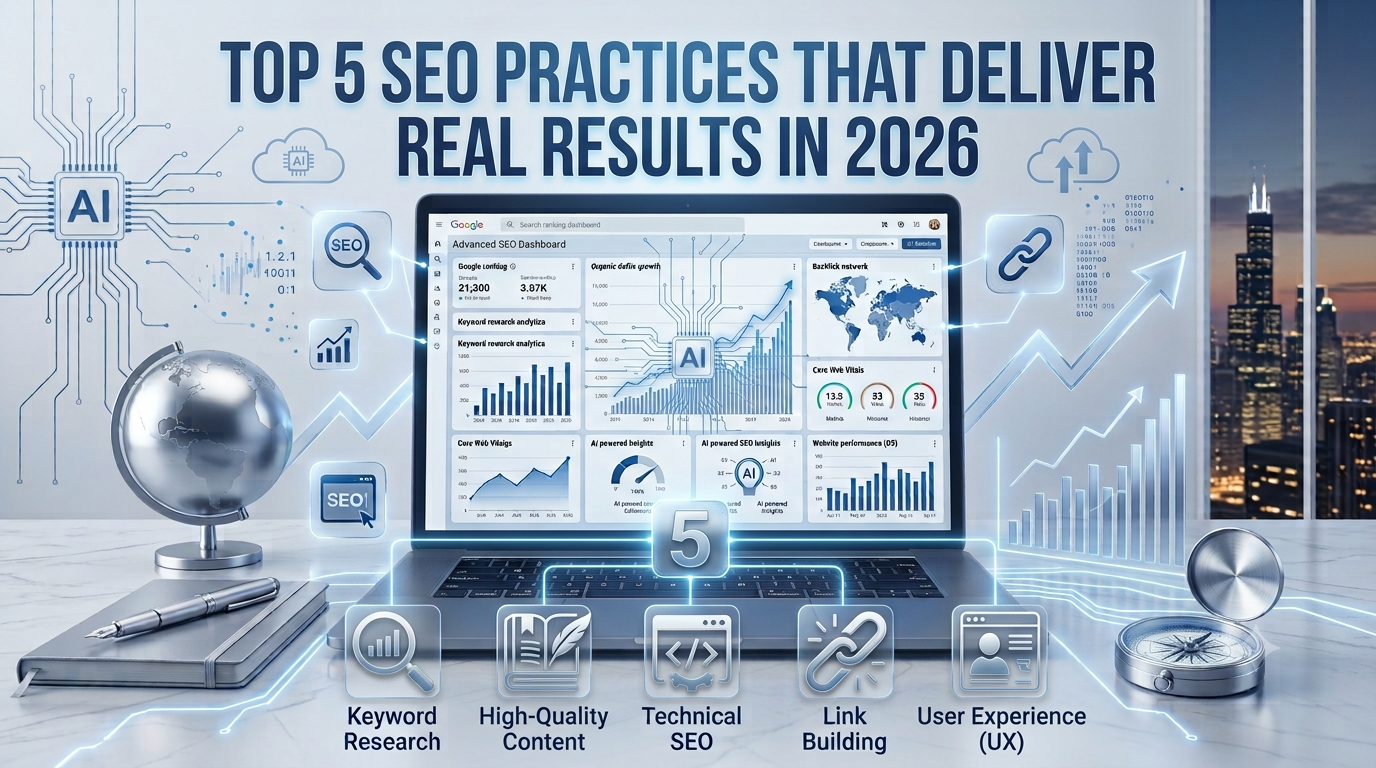
Top 5 SEO Practices That Deliver Real Results in 2026
Introduction
Search Engine Optimization (SEO) continues to be one of the most effective digital marketing strategies for driving sustainable online growth. As search engines become increasingly sophisticated, businesses must move beyond outdated optimization tactics and embrace modern SEO practices that focus on user experience, content quality, technical performance, and authority. In 2026, success in SEO is no longer about manipulating algorithms—it is about creating websites that genuinely help users while meeting Google’s quality standards.
Millions of websites compete for visibility on search engine results pages every day. Appearing on the first page of Google can dramatically increase organic traffic, generate qualified leads, improve brand credibility, and boost conversions. However, achieving and maintaining high rankings requires a strategic, long-term approach that evolves alongside changing search engine algorithms.
Google now uses artificial intelligence, machine learning, and advanced ranking systems to evaluate website quality. Factors such as search intent, page experience, mobile optimization, website speed, topical authority, and trustworthy backlinks all contribute to search visibility. Businesses that consistently optimize these areas are far more likely to achieve lasting success than those relying on short-term SEO tricks.
Whether you manage a business website, an online store, a SaaS platform, or a personal blog, implementing proven SEO practices can help you improve rankings and attract valuable organic traffic. In this guide, we will explore five SEO practices that continue to deliver real, measurable results in 2026.
1. Prioritize Search Intent Over Keyword Density
One of the most important shifts in modern SEO is the focus on understanding search intent rather than simply targeting keywords. Search intent refers to the purpose behind a user’s query and what they expect to find when they search.
Google aims to deliver results that best satisfy user intent. If your content closely matches what users are looking for, it is more likely to rank well.
The four primary types of search intent include:
Informational
Navigational
Commercial Investigation
Transactional
For example, someone searching for “How to improve website speed” expects an educational guide, while someone searching for “Best SEO agency near me” is likely looking to hire professional services.
To optimize for search intent:
Research long-tail keywords.
Analyze the top-ranking pages.
Cover related questions naturally.
Use semantic keywords.
Create comprehensive content around the topic.
When visitors quickly find the answers they need, they stay longer, engage more deeply, and send positive signals that support higher rankings.
2. Create Helpful, Evergreen, and Authoritative Content
High-quality content remains the foundation of successful SEO. Google’s Helpful Content System rewards websites that consistently publish original, informative, and user-focused articles.
Instead of creating content solely for search engines, focus on helping readers solve problems.
Strong SEO content should:
Provide accurate information.
Include practical advice.
Answer frequently asked questions.
Demonstrate expertise.
Offer unique perspectives.
Remain easy to read.
Evergreen content is especially valuable because it continues attracting visitors long after publication.
Examples include:
Complete guides
Tutorials
Checklists
Industry best practices
Educational resources
An effective article typically includes:
A compelling introduction.
Organized headings.
Bullet points.
Examples.
Internal links.
Frequently Asked Questions.
A strong conclusion.
Regularly updating older content with fresh examples and current information helps maintain rankings and improve search visibility.
3. Optimize Technical SEO for Maximum Performance
Technical SEO provides the foundation that allows search engines to crawl, understand, and index your website efficiently.
Improve Website Speed
Website speed directly impacts both user satisfaction and search rankings.
Improve speed by:
Compressing images.
Reducing CSS and JavaScript.
Using browser caching.
Selecting quality hosting.
Implementing a Content Delivery Network (CDN).
Mobile Optimization
Google uses mobile-first indexing, making responsive design essential.
Ensure your website:
Adapts to every screen size.
Loads quickly.
Uses readable typography.
Provides intuitive navigation.
Website Security
HTTPS encryption improves trust while protecting user information.
Improve Crawlability
Help search engines discover important pages by:
Creating XML sitemaps.
Configuring robots.txt.
Fixing broken links.
Removing duplicate content.
Optimize Core Web Vitals
Google evaluates:
Largest Contentful Paint (LCP)
Interaction to Next Paint (INP)
Cumulative Layout Shift (CLS)
Improving these metrics enhances user experience and strengthens rankings.
4. Earn High-Quality Backlinks and Build Authority
Backlinks remain one of Google’s strongest indicators of trust and authority. However, quality matters much more than quantity.
Effective backlink strategies include:
Guest Blogging
Publish informative articles on respected websites within your industry.
Digital PR
Share unique research, industry reports, or case studies that journalists naturally reference.
Create Link-Worthy Resources
Develop valuable assets such as:
Free tools
Templates
Industry reports
Ultimate guides
Checklists
These resources naturally attract backlinks.
Broken Link Building
Find broken links on authoritative websites and recommend your own content as a replacement.
Avoid purchasing backlinks or participating in manipulative link-building schemes, as these practices violate Google’s guidelines and may result in ranking penalties.
5. Improve User Experience and On-Page SEO
Modern SEO increasingly focuses on how visitors interact with your website. A positive user experience encourages longer visits, greater engagement, and improved search visibility.
Optimize Title Tags
Write compelling titles that naturally include your primary keyword.
Example:
Top 5 SEO Practices That Deliver Real Results in 2026
Write Better Meta Descriptions
Clear and engaging meta descriptions increase click-through rates from search results.
Structure Content Properly
Use:
H1
H2
H3
Logical headings improve readability and help search engines understand your content.
Internal Linking
Connect related pages to improve navigation and distribute authority throughout your website.
Optimize Images
Improve image SEO by:
Compressing images.
Writing descriptive filenames.
Adding relevant alt text.
Improve Readability
Readers prefer content with:
Short paragraphs.
Bullet points.
Clear formatting.
Simple language.
A better user experience reduces bounce rates and increases visitor satisfaction.
Additional SEO Best Practices for 2026
Beyond the five core practices, consider implementing these additional strategies:
Optimize for voice search.
Use Schema Markup for rich search results.
Build topical authority.
Publish consistently.
Update older content regularly.
Monitor Google Search Console.
Track keyword rankings.
Improve website accessibility.
Analyze competitors.
Measure performance with analytics tools.
Together, these strategies create a comprehensive SEO framework for long-term growth.
Frequently Asked Questions (FAQs)
1. What is the most effective SEO practice in 2026?
Understanding search intent and creating helpful, user-focused content remain the most effective SEO practices.
2. Why is technical SEO important?
Technical SEO ensures search engines can efficiently crawl, index, and understand your website while improving speed, security, and user experience.
3. Are backlinks still important?
Yes. High-quality backlinks from trustworthy websites continue to be one of Google’s strongest ranking signals.
4. How long does SEO take to produce results?
Most websites begin seeing noticeable improvements within three to six months, depending on competition and optimization quality.
5. What are Core Web Vitals?
Core Web Vitals measure loading performance, responsiveness, and visual stability to evaluate page experience.
6. Should old content be updated?
Yes. Refreshing older articles improves relevance, maintains rankings, and provides better value for users.
7. Can small businesses succeed with SEO?
Absolutely. By targeting niche audiences, publishing valuable content, and consistently optimizing their websites, small businesses can compete effectively in search results.
8. Is SEO better than paid advertising?
SEO and paid advertising serve different purposes. SEO provides sustainable long-term traffic, while paid advertising delivers immediate visibility. Many businesses benefit from using both together.
Conclusion
SEO in 2026 is built on delivering exceptional value rather than chasing algorithm loopholes. Businesses that prioritize user intent, publish authoritative content, optimize technical performance, earn trustworthy backlinks, and provide outstanding user experiences are far more likely to achieve sustainable search visibility.
The five SEO practices discussed in this guide provide a reliable framework for long-term success. While search engine algorithms will continue evolving, the fundamental principles of helping users, maintaining technical excellence, and building trust will remain central to effective SEO.
By consistently applying these proven strategies, monitoring performance, and adapting to industry changes, you can strengthen your website’s online presence, increase organic traffic, improve search rankings, and build lasting digital success throughout 2026 and beyond.